Tag : food speculators and rising food prices | health fitness diet nutrition and lifestyle
Latest News :
Recent Health
Tampilkan postingan dengan label food speculators and rising food prices. Tampilkan semua postingan

Getting Used to Life Without Food, Part 1


 By F. William Engdahl


Wall Street, BP, Bio-Ethanol and the Death of Millions


'Our planet has everything we need to produce nutritious natural food to feed the entire world population many times over. Yet, we face a decade or more of famine on a global scale because key forces and interest groups have decided to artificially create a scarcity of nutritious food, writes F. William Engdahl.'

Read more...

Why Are Food Prices Rising So Fast?

 http://journalrecord.com/files/2011/05/bc-grocery-store_MS_05-06-11.jpg


'If you do much grocery shopping, you have probably noticed that the cost of food has been rising at a very brisk pace over the past year.  So why are food prices rising so fast?  According to Federal Reserve Chairman Ben Bernanke, inflation is still very low and the economy is improving.  

So what is going on here?  When I go to the grocery store these days, there are very few things that I will buy unless they are on sale.  In fact, I have noticed that many of the new “sale prices” are the old regular prices.  Other items have had their packages reduced in size in order to hide the price increases.  But with millions of American families just barely scraping by as it is, what is going to happen if food prices keep rising this rapidly?'


Read more...

MSNBC - Wall Street Is Behind High Food-Oil Prices Thats Causing Arab Instability

Is There a Financial Scam Behind the Rise in Oil and Food Prices?


'When I met Phil the other night, he was on fire, enraged by what he believes is the scam of the century that no one wants to talk about, because so many powerful people armed with legions of lawyers want unquestioning allegiance, and will sue you into silence. 

He studies the oil/food issue carefully and has concluded, “It’s a scam folks, it’s nothing but a huge scam and it’s destroying the US economy as well as the entire global economy but no one complains because they are ‘only’ stealing about $1.50 per gallon from each individual person in the industrialized world.” 

“It’s the top 0.01% robbing the next 39.99% – the bottom 60% can’t afford cars anyway (they just starve quietly to death, as food prices climb on fuel costs). If someone breaks into your car and steals a $500 stereo, you go to the police, but if someone charges you an extra $30 every time you fill up your tank 50 times a year ($1,500) you shut up and pay your bill. Great system, right?”' 


Read more...

Farmers choose cotton over food crops

 http://ipm.ncsu.edu/cotton/insectcorner/photos/images/Open_cotton_plant.jpg

 From William Neuman in the New York Times:

“SPEARMAN, Tex. — 'Tight supplies of corn, soybeans and wheat have sent prices skyrocketing in the last year, prompting worries of a looming global food crisis.
In other years, American farmers have responded to high prices by devoting more land to staple food crops.
But this spring, many farmers in southern states will be planting cotton in ground where they used to grow corn, soybeans or wheat — spurred on by cotton prices that have soared as clothing makers clamor for more and poor harvests crimp supply.
The result is an acreage war between rival commodities used to feed and clothe the world’s population.

“There’s a lot more money to be made in cotton right now,” said Ramon Vela, a farmer here in the Texas Panhandle, as he stood in a field where he grew wheat last year, its stubble now plowed under to make way for cotton. Around the first week of May, Mr. Vela, 37, will plant 1,100 acres of cotton, up from 210 acres a year ago. “The prices are the big thing,” he said. “That’s the driving force.” '


Read more...

Long Term Food Storage Basics - How to Pack Rice, Wheat, Beans and Dry Goods

14 Ways to Save Money on Groceries

 http://msnbcmedia.msn.com/i/CNBC/Sections/News_And_Analysis/_News/_SLIDESHOWS/FoodieCities/SS_Top_Foodie_Cities_Portland_Maine.jpg


by Dr. Mercola
Becoming a savvy grocery shopper is a skill well worth learning, as you will need to invest some high-quality time shopping for, and preparing, your food if you want to stay healthy.
You may be tempted to "save money" on food using the dollar menu at your local fast-food restaurant, but this will cost you dearly in the long-run as the food is virtually guaranteed to:
Grocery shopping takes more time and effort, true. But it's also the only way you'll have control over what types of food you feed your family. Learning to be a savvy food shopper is not only about the price tag (looking for freshness and food quality are also important), but, that being said, the more you can keep your grocery bill down, the better.

Read more...

Food/Financial Crisis of 2011

image

by Dr. Mark Sircus


'Things can get so bad that people will not be able to buy foods at any price because they simply will not be available because they have been bought up by someone else. I am not talking about your neighbor here who just happened to beat you to the supermarket this morning. Imagine if China pulls out a $100 billion out of its almost bottomless pockets and purchases grain to feed its billions? Why wouldn’t they, after all, spend increasingly worthless paper on a mountain of food?'


Read more...

Food crisis benefits Goldman Sachs

This Financial Catastrophe Can Destroy Your Future Fast - How to Avoid it

By Dr. Mercola

'Is the US headed toward an economic crisis that could dwarf the Great Depression?
Well, the signs are hard to ignore, and there are many striking similarities between events today and the events that led up to the harshest years during the Great Depression, from banking failures in the thousands and rising unemployment, to the passing of laws and creation of administrative boards later declared unconstitutional.
As reported by the Wall Street Journal, food prices have risen sharply in the past few months, and the food manufacturing and restaurant industries warn that further increases may be unavoidable, despite the risks involved:
"For food executives, how quickly to pass along higher costs presents difficult choices.
Missteps could be costly when the economy remains weak. Many Americans, nervous about high unemployment, have pledged allegiance to their pennies and are willing to trade down on brands, switch supermarkets, opt for Burger King over Applebee's, or stop dining out altogether to save money."'

Read more...

Banksters Inflate Speculative Food Bubble, U.N. Offers Global Governance Solution

Speculative Food Bubble


'Never let a good crisis go to waste. The international bankers are taking advantage of the "food crisis" by driving up food prices in what is shaping up to be a classic case of a manufactured bubble.  It is also looking like a clear model of Problem-Reaction-Solution methodology. Create the food inflation problem (of course profiting all the way up), force an enraged reaction among the public, and take more sovereignty away with the solution of global food regulation.'


Read more...

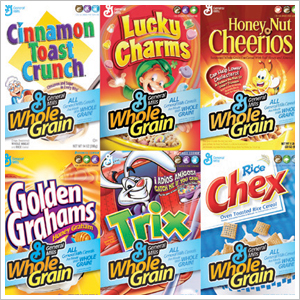
General Mills Signals Faster U.S. Food Inflation: Chart of the Day

https://blogger.googleusercontent.com/img/b/R29vZ2xl/AVvXsEh_ustbQvqQuf04LMi90bNstTQxFu8DogCZQuoBtw2Ar9iBvybBzicw94_gYiDjEPpYaQZ3LBuJk4p1tV3LQmuu9YS6FrGjQltpMh1JTDkKWLC1Mb8hAfC-I3WNWwuGKuKA-tNCt04mK4g-/s1600/General-Mills-cereal.jpg

 Eat Your Wheaties Before Next Month


Source: Bloomberg


'General Mills Inc. showed where U.S. food prices are headed by making some of its breakfast cereals and baking products more expensive, according to Christopher Growe, a Stifel Nicolaus & Co. analyst. As the CHART OF THE DAY shows, retail prices for food are lower than they were in May though the cost of farm commodities has soared. 

The food component of the U.S. consumer price index and a gauge of agricultural-product prices, compiled by UBS AG and Bloomberg, were used to make the comparison. General Mills, the maker of Cheerios, Chex and Wheaties, will raise cereal prices on Nov. 15. The increase will affect about 25 percent of its cereal production and amount to a “low single-digit” percentage, Kirstie Foster, a company spokeswoman, wrote today in an e-mail. 

Prices for some baking mixes are set for “a mid single- digit increase,” effective Jan. 3, Foster wrote. The company’s product lines include Betty Crocker, Bisquick and Pillsbury. “While General Mills may be the first of the large food companies to really press higher on pricing, we believe many others may follow,” Growe wrote. “It’s just a matter of time, given what is coming down the pike in the way of inflation.”

The UBS Bloomberg Constant Maturity Commodity Index for farm products jumped 50 percent between June 7, when it fell to this year’s low, and yesterday, when it set a record by closing at 1,770.479. The previous high was set in July 2008.' 


 View Chart (a must view)

Hunger & Starvation to Visit Humanity

 image

 By Dr. Mark Sircus


'When a large segment of the population is facing a drastic cut in income in the face of escalating food prices, we have a catastrophic problem in the making. Today we have the simultaneous events of income deflation and food inflation, two high-speed express trains coming down the tracks at each other, plus a financial crisis colliding with staggering crop losses that are cutting deeply into available planetary food reserves. Prices of food are beginning to soar again just as millions are losing the ability to afford a reasonable diet, though little of this is being observed or reported. But soon even the blind will see.'


Read more...

How the financial markets create hunger and make huge profits

Chicago Board of Trade Corn pit. 1993

'The deregulation of global agricultural markets was part of the economic deregulation driven by the World Trade Organization (WTO), the World Bank and the International Monetary Fund. It was a process initiated by the Breton Woods Agreements of 1944 to standardize international trade and marketing policies to facilitate global trade [9].

'It eliminated government intervention in agricultural markets, dismantling global commodity agreements, price supports, and other mechanisms that had helped stabilize global supplies and prices. The WTO’s Agreement on Agriculture, and other multi-lateral and bilateral free-trade agreements including the North American Free Trade Agreement (NAFTA), opened up markets in the developing world to an increasingly powerful global agribusiness industry.

The consequence of deregulation was [10] “to replace local market access for the majority of small farmers with global market access for a few global transnational companies. Thanks to non-existent anti-trust enforcement and rampant vertical integration, [t]hree companies - Cargill, Archer Daniels Midland (ADM), and Bung - control the vast majority of global grain trading, while Monsanto controls more than one-fifth of the global market in seeds.”'


Read more...


Support : new Health articles | Earnings Disclaimer | Privacy Policy
Copyright © 2011. health fitness diet nutrition and lifestyle - All Rights Reserved
Template Created and Published by BLOGGERspherepedia
Proudly powered by Blogger